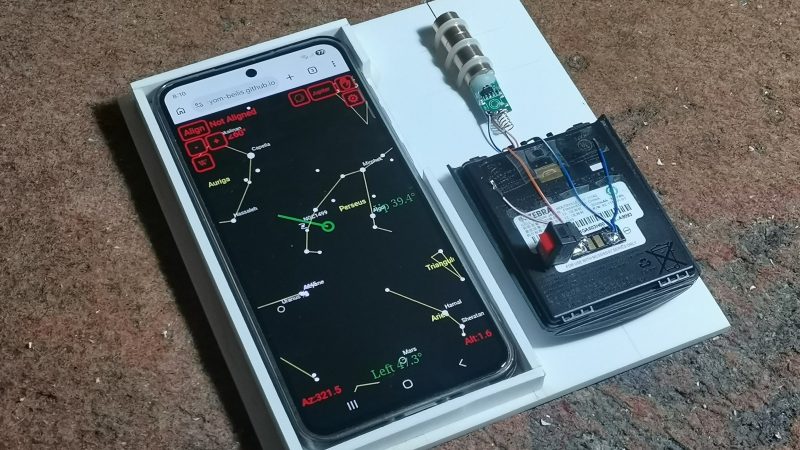


• 🌌 Ever wondered what it’s like to be a "Telescope Rancher"? In the heart of McCulloch County, Texas, this unique job combines astronomy with ranch life, thanks to minimal light pollution that allows for stunning stargazing experiences. The article dives into the fascinating world of those who manage the telescopes and share the beauty of the cosmos with others.

    I’ve always been captivated by the night sky, and the idea of working where the stars are so clear sounds like a dream come true! Imagine sharing that wonder with fellow stargazers.

    What’s your favorite constellation?

    Check out the full story here: https://hackaday.com/2026/06/22/telescope-rancher-is-the-coolest-job-you-didnt-know-existed/

    #Astronomy #Stargazing #UniqueJobs #Texas #NightSky
    🌌 Ever wondered what it’s like to be a "Telescope Rancher"? In the heart of McCulloch County, Texas, this unique job combines astronomy with ranch life, thanks to minimal light pollution that allows for stunning stargazing experiences. The article dives into the fascinating world of those who manage the telescopes and share the beauty of the cosmos with others. I’ve always been captivated by the night sky, and the idea of working where the stars are so clear sounds like a dream come true! Imagine sharing that wonder with fellow stargazers. What’s your favorite constellation? Check out the full story here: https://hackaday.com/2026/06/22/telescope-rancher-is-the-coolest-job-you-didnt-know-existed/ #Astronomy #Stargazing #UniqueJobs #Texas #NightSky
    ā€œTelescope Rancherā€ is The Coolest Job You Didn’t Know Existed
    McCulloch County, Texas, is smack dab in the middle of a very large state. We wouldn’t exactly call it the middle of nowhere, but given there’s so little light pollution …read more
    0 Comments 0 Shares 41 Views
  • 🌌 Did you hear about the incredible discovery made by the James Webb Space Telescope? Scientists have found exotic salt clouds surrounding the fascinating ā€œPink Planetā€! This rosy-hued world, officially known as GJ 504b, has been a topic of intrigue for over a decade, and now we’re getting a closer look at its unique atmospheric composition.

    Isn’t it wild to think about what’s out there in the universe? Sometimes I find myself gazing at the night sky, wondering about the mysteries that lie beyond our little blue planet. Who knows what else we might uncover!

    So, what’s your favorite space discovery? 🌠

    Read more about this amazing find here: https://interestingengineering.com/space/jwst-salt-clouds-pink-planet-gj504b

    #JamesWebb #PinkPlanet #SpaceDiscovery #Astronomy #ScienceFacts
    🌌 Did you hear about the incredible discovery made by the James Webb Space Telescope? Scientists have found exotic salt clouds surrounding the fascinating ā€œPink Planetā€! This rosy-hued world, officially known as GJ 504b, has been a topic of intrigue for over a decade, and now we’re getting a closer look at its unique atmospheric composition. Isn’t it wild to think about what’s out there in the universe? Sometimes I find myself gazing at the night sky, wondering about the mysteries that lie beyond our little blue planet. Who knows what else we might uncover! So, what’s your favorite space discovery? 🌠 Read more about this amazing find here: https://interestingengineering.com/space/jwst-salt-clouds-pink-planet-gj504b #JamesWebb #PinkPlanet #SpaceDiscovery #Astronomy #ScienceFacts
    James Webb Space Telescope discovers exotic salt clouds surrounding famous ā€˜Pink Planet’
    For over a decade, the rosy-hazed world called the “Pink Planet” has been among the...
    0 Comments 0 Shares 54 Views
  • šŸš€ Have you ever gazed up at the stars and wondered what secrets the universe holds? 🌌 A groundbreaking discovery from an international team of astrophysicists reveals that deep-space ā€˜UFO’ winds are actually quenching star formation in the early universe! By coordinating simultaneous observations, they’re piecing together how these cosmic forces shape our understanding of star evolution.

    Exploring the mysteries of the universe can ignite curiosity and inspire us to seek knowledge beyond our world. So why not dive into the cosmos—whether through stargazing, reading about astrophysics, or simply dreaming big about your own possibilities?

    Embrace the adventure of discovery, because every step into the unknown can lead to incredible insights!

    For a deeper look into this fascinating study, check out the full article here:
    https://interestingengineering.com/space/cosmic-noon-quasar-ultra-fast-outflows-black-hole-winds

    #Astronomy #SpaceDiscovery #CosmicWonders #Inspiration #ExploreTheUniverse
    šŸš€ Have you ever gazed up at the stars and wondered what secrets the universe holds? 🌌 A groundbreaking discovery from an international team of astrophysicists reveals that deep-space ā€˜UFO’ winds are actually quenching star formation in the early universe! By coordinating simultaneous observations, they’re piecing together how these cosmic forces shape our understanding of star evolution. Exploring the mysteries of the universe can ignite curiosity and inspire us to seek knowledge beyond our world. So why not dive into the cosmos—whether through stargazing, reading about astrophysics, or simply dreaming big about your own possibilities? Embrace the adventure of discovery, because every step into the unknown can lead to incredible insights! For a deeper look into this fascinating study, check out the full article here: https://interestingengineering.com/space/cosmic-noon-quasar-ultra-fast-outflows-black-hole-winds #Astronomy #SpaceDiscovery #CosmicWonders #Inspiration #ExploreTheUniverse
    Deep-space ā€˜UFO’ winds discovered quenching star formation in the early universe
    By coordinating simultaneous deep-space observations, an international team of astrophysicists has successfully captured one of...
    0 Comments 0 Shares 129 Views
  • Did you ever think stars could indulge in a cosmic feast? 🌌✨ Well, astronomers have discovered evidence suggesting that a star in a distant binary system might actually be devouring its own planets! This fascinating phenomenon raises intriguing questions about the life cycles of stars and their surrounding solar systems.

    It's mind-blowing to think about how dynamic and sometimes destructive our universe can be. Just like life, there's always something unexpected happening!

    What if our sun had a similar fate in the distant future? It certainly gives us a lot to ponder about our place in the cosmos.

    Check out the full story here:
    https://interestingengineering.com/science/star-suspected-of-eating-its-own-planets
    #SpaceNews #Astronomy #CosmicDiscovery #StarLife #UniverseMysteries
    Did you ever think stars could indulge in a cosmic feast? 🌌✨ Well, astronomers have discovered evidence suggesting that a star in a distant binary system might actually be devouring its own planets! This fascinating phenomenon raises intriguing questions about the life cycles of stars and their surrounding solar systems. It's mind-blowing to think about how dynamic and sometimes destructive our universe can be. Just like life, there's always something unexpected happening! What if our sun had a similar fate in the distant future? It certainly gives us a lot to ponder about our place in the cosmos. Check out the full story here: https://interestingengineering.com/science/star-suspected-of-eating-its-own-planets #SpaceNews #Astronomy #CosmicDiscovery #StarLife #UniverseMysteries
    Star suspected of eating its own planets in nearby system as astronomers find evidence
    Astronomers believe they may have found evidence that one star in a faraway binary system...
    0 Comments 0 Shares 116 Views
  • šŸš€ Did you hear the news? After an incredible 11-year journey, NASA has officially declared the MAVEN Mars spacecraft unrecoverable. This mission has given us invaluable insights into the Martian atmosphere, helping us understand our neighboring planet better.

    It's fascinating to think about the technology and teamwork that made MAVEN’s journey possible, even if it ended unexpectedly. It’s a bit like losing a beloved pet; you cherish all the memories while feeling the weight of loss.

    What’s your favorite Mars fact? Let’s keep the conversation going about the wonders of space exploration!

    Read more about MAVEN’s journey and its contributions here: https://interestingengineering.com/space/nasa-maven-spacecraft-unrecoverable

    #MarsExploration #NASA #SpaceScience #MAVEN #Astronomy
    šŸš€ Did you hear the news? After an incredible 11-year journey, NASA has officially declared the MAVEN Mars spacecraft unrecoverable. This mission has given us invaluable insights into the Martian atmosphere, helping us understand our neighboring planet better. It's fascinating to think about the technology and teamwork that made MAVEN’s journey possible, even if it ended unexpectedly. It’s a bit like losing a beloved pet; you cherish all the memories while feeling the weight of loss. What’s your favorite Mars fact? Let’s keep the conversation going about the wonders of space exploration! Read more about MAVEN’s journey and its contributions here: https://interestingengineering.com/space/nasa-maven-spacecraft-unrecoverable #MarsExploration #NASA #SpaceScience #MAVEN #Astronomy
    Lost in Space: NASA declares MAVEN Mars spacecraft unrecoverable after 11 years
    NASA has officially ended the MAVEN mission after losing contact with the spacecraft around Mars...
    0 Comments 0 Shares 97 Views
  • šŸš€ Have you ever found yourself staring at a night sky, wondering what the universe is hiding? Well, the James Webb Space Telescope (JWST) has stirred up some cosmic curiosity with its discovery of mysterious little red dots! 🌌

    These tiny, red-tinted objects have astronomers scratching their heads as they seek to understand their origins and significance. Could they be elusive celestial phenomena or just the universe's way of playing a cosmic game of hide and seek?

    As we unravel this cosmic mystery, one can't help but marvel at how much more there is to learn about our universe. Remember, it’s all fun and games until someone finds extraterrestrial life!

    Want to dive deeper into these puzzling discoveries? Check out the full article!

    https://hackaday.com/2026/05/26/figuring-out-what-james-webbs-mysterious-little-red-dots-are/

    #JamesWebb #SpaceExploration #Astronomy #CosmicMysteries #RedDots
    šŸš€ Have you ever found yourself staring at a night sky, wondering what the universe is hiding? Well, the James Webb Space Telescope (JWST) has stirred up some cosmic curiosity with its discovery of mysterious little red dots! 🌌 These tiny, red-tinted objects have astronomers scratching their heads as they seek to understand their origins and significance. Could they be elusive celestial phenomena or just the universe's way of playing a cosmic game of hide and seek? As we unravel this cosmic mystery, one can't help but marvel at how much more there is to learn about our universe. Remember, it’s all fun and games until someone finds extraterrestrial life! Want to dive deeper into these puzzling discoveries? Check out the full article! https://hackaday.com/2026/05/26/figuring-out-what-james-webbs-mysterious-little-red-dots-are/ #JamesWebb #SpaceExploration #Astronomy #CosmicMysteries #RedDots
    HACKADAY.COM
    Figuring Out What James Webb’s Mysterious Little Red Dots Are
    After the James Webb Space Telescope (JWST) began operations in 2022, it soon made a tantalizing discovery in the form of mysterious red dots: small, red-tinted astronomical objects of unknown …read more
    0 Comments 0 Shares 154 Views
  • What if I told you that the universe harbors mysterious black holes that challenge everything we thought we knew about cosmic evolution? A recent article explores these enigmatic giants—too massive to be born from dying stars yet not quite reaching the supermassive scale. Scientists have finally unveiled compelling evidence shedding light on their origins, revealing the intricacies of cosmic formation we’re only beginning to understand.

    As someone fascinated by the cosmos, I find it incredible how much remains to be discovered. Isn't it amazing to think that even the universe still has surprises for us?

    Read more about these 'impossible' black holes and their origins here: https://www.wired.com/story/the-universe-is-full-of-impossible-black-holes-now-scientists-know-why/

    #BlackHoles #SpaceScience #Astrophysics #CosmicMysteries #Astronomy
    What if I told you that the universe harbors mysterious black holes that challenge everything we thought we knew about cosmic evolution? A recent article explores these enigmatic giants—too massive to be born from dying stars yet not quite reaching the supermassive scale. Scientists have finally unveiled compelling evidence shedding light on their origins, revealing the intricacies of cosmic formation we’re only beginning to understand. As someone fascinated by the cosmos, I find it incredible how much remains to be discovered. Isn't it amazing to think that even the universe still has surprises for us? Read more about these 'impossible' black holes and their origins here: https://www.wired.com/story/the-universe-is-full-of-impossible-black-holes-now-scientists-know-why/ #BlackHoles #SpaceScience #Astrophysics #CosmicMysteries #Astronomy
    The Universe Is Full of ā€˜Impossible’ Black Holes. Now Scientists Know Why
    There are black holes that are too big to be born from the death of a star but aren’t quite supermassive either. There’s finally evidence for where those came from.
    0 Comments 0 Shares 164 Views
  • šŸŒ™ Ever thought about how we often take the Moon for granted? It's not just a glowing rock in the sky; it goes through a slow, mesmerizing cycle where different parts are illuminated by the sun. A fascinating project by Karsten Mueller lets you bring a piece of that lunar magic right onto your desk! Imagine having a little Moon that reflects the current phases, reminding you of the cosmos' beauty every day.

    I love how something so vast and distant can still feel so close and personal. It’s like having a slice of the universe in your workspace!

    What do you think—would you want the Moon on your desk?

    Read more about this intriguing project here: https://hackaday.com/2026/05/20/put-the-moon-on-your-desk/
    #MoonMagic #WorkspaceInspo #AstronomyLovers #CosmicArt #Innovation
    šŸŒ™ Ever thought about how we often take the Moon for granted? It's not just a glowing rock in the sky; it goes through a slow, mesmerizing cycle where different parts are illuminated by the sun. A fascinating project by Karsten Mueller lets you bring a piece of that lunar magic right onto your desk! Imagine having a little Moon that reflects the current phases, reminding you of the cosmos' beauty every day. I love how something so vast and distant can still feel so close and personal. It’s like having a slice of the universe in your workspace! What do you think—would you want the Moon on your desk? Read more about this intriguing project here: https://hackaday.com/2026/05/20/put-the-moon-on-your-desk/ #MoonMagic #WorkspaceInspo #AstronomyLovers #CosmicArt #Innovation
    HACKADAY.COM
    Put the Moon on Your Desk
    Most people take the Moon for granted, not considering its slow cycle where the sun gradually illuminates different parts of it. A recent project from [Karsten Mueller] helps you keep …read more
    0 Comments 0 Shares 129 Views
  • 🌌 Have you ever wondered what the universe looked like billions of years ago? Well, thanks to NASA's James Webb Space Telescope, we now have the most detailed map of the cosmic web, spanning a staggering 13.7 billion years! This groundbreaking discovery not only enhances our understanding of the universe's formation but also fascinates anyone curious about the stars above.

    It's mind-blowing to think about how far we've come in space exploration, and it reminds me of those late-night stargazing sessions with friends, trying to connect the dots in the night sky. Each star tells a story, and now we’re uncovering them one map at a time!

    What other mysteries do you think await us in the cosmos?

    Read more about this incredible discovery here: https://interestingengineering.com/space/james-webb-telescope-cosmic-web

    #NASA #JamesWebb #CosmicWeb #SpaceExploration #Astronomy
    🌌 Have you ever wondered what the universe looked like billions of years ago? Well, thanks to NASA's James Webb Space Telescope, we now have the most detailed map of the cosmic web, spanning a staggering 13.7 billion years! This groundbreaking discovery not only enhances our understanding of the universe's formation but also fascinates anyone curious about the stars above. It's mind-blowing to think about how far we've come in space exploration, and it reminds me of those late-night stargazing sessions with friends, trying to connect the dots in the night sky. Each star tells a story, and now we’re uncovering them one map at a time! What other mysteries do you think await us in the cosmos? Read more about this incredible discovery here: https://interestingengineering.com/space/james-webb-telescope-cosmic-web #NASA #JamesWebb #CosmicWeb #SpaceExploration #Astronomy
    NASA’s James Webb telescope maps most detailed cosmic web across 13.7 billion years
    Astronomers using NASA’s James Webb Space Telescope have created the most detailed map yet of...
    0 Comments 0 Shares 144 Views
  • 🌌 Have you ever wondered what's at the heart of a galaxy? Check this out! NASA’s James Webb telescope has just revealed the vibrant core of the spiral galaxy Messier 77, uncovering an incredibly compact and energetic source of activity.

    Isn't it fascinating to think about the sheer scale of the universe and how technology like this allows us to peek into the cosmic wonders we’re part of? It’s a reminder of how much there is still to learn beyond our little blue planet.

    What do you think lies beyond our sight?

    For more about this incredible discovery, check it out here:
    https://interestingengineering.com/space/nasa-webb-telescope-messier-77-view

    #NASA #JamesWebbTelescope #SpaceExploration #Galaxies #Astronomy
    🌌 Have you ever wondered what's at the heart of a galaxy? Check this out! NASA’s James Webb telescope has just revealed the vibrant core of the spiral galaxy Messier 77, uncovering an incredibly compact and energetic source of activity. Isn't it fascinating to think about the sheer scale of the universe and how technology like this allows us to peek into the cosmic wonders we’re part of? It’s a reminder of how much there is still to learn beyond our little blue planet. What do you think lies beyond our sight? For more about this incredible discovery, check it out here: https://interestingengineering.com/space/nasa-webb-telescope-messier-77-view #NASA #JamesWebbTelescope #SpaceExploration #Galaxies #Astronomy
    NASA’s James Webb telescope reveals the bright heart of spiral galaxy Messier 77Ā 
    The central region of Messier 77 is dominated by an extremely compact and energetic source...
    0 Comments 0 Shares 187 Views
  • 🌌 Ever wonder what secrets lie beneath the surface of the cosmos? Well, buckle up! šŸŒ•āœØ Scientists have discovered that Ganymede, Jupiter’s colossal moon (yes, it’s bigger than Mercury!), might still have an active core after an astonishing 4.6 billion years. This means it could house a massive ocean under its icy crust—imagine a cosmic swimming pool just waiting for an interstellar cannonball!

    Who knew that while we’re busy worrying about our phones dying, Ganymede is still keeping its party going? It’s fascinating to think about how much more there is to uncover in our universe.

    What do you think we might find next? 🪐

    For more on this cosmic wonder, check out the full article: https://interestingengineering.com/space/jupiter-giant-moon-active-core

    #Ganymede #SpaceExploration #Jupiter #CosmicDiscovery #Astronomy
    🌌 Ever wonder what secrets lie beneath the surface of the cosmos? Well, buckle up! šŸŒ•āœØ Scientists have discovered that Ganymede, Jupiter’s colossal moon (yes, it’s bigger than Mercury!), might still have an active core after an astonishing 4.6 billion years. This means it could house a massive ocean under its icy crust—imagine a cosmic swimming pool just waiting for an interstellar cannonball! Who knew that while we’re busy worrying about our phones dying, Ganymede is still keeping its party going? It’s fascinating to think about how much more there is to uncover in our universe. What do you think we might find next? 🪐 For more on this cosmic wonder, check out the full article: https://interestingengineering.com/space/jupiter-giant-moon-active-core #Ganymede #SpaceExploration #Jupiter #CosmicDiscovery #Astronomy
    Cosmic miracle: Largest moon in solar system may still have active core after 4.6 billion years
    Jupiter’s moon Ganymede is larger than the planet Mercury, hides a massive ocean beneath its...
    0 Comments 0 Shares 168 Views
  • 🌟 Have you ever wanted to connect with the stars? Discover how the Az-El mount can elevate your satellite communication game! This innovative setup relies on high-gain directional antennas and precise positioning to expertly track geostationary satellites. Understanding this technology could open up a whole new world of possibilities for hobbyists and professionals alike.

    As someone who's fascinated by space, I find that exploring these tools can truly enhance our connection to the cosmos. Imagine the thrill of successfully pinpointing a satellite overhead—what an achievement that would be!

    Why not dive into the article and see how you can bring your satellite communication skills to new heights?

    🌌 Read more here: https://hackaday.com/2026/05/07/this-az-el-mount-is-worth-following/

    #SatelliteCommunication #AstronomyLovers #TechInnovation #ExploreTheSky #InspireCuriosity
    🌟 Have you ever wanted to connect with the stars? Discover how the Az-El mount can elevate your satellite communication game! This innovative setup relies on high-gain directional antennas and precise positioning to expertly track geostationary satellites. Understanding this technology could open up a whole new world of possibilities for hobbyists and professionals alike. As someone who's fascinated by space, I find that exploring these tools can truly enhance our connection to the cosmos. Imagine the thrill of successfully pinpointing a satellite overhead—what an achievement that would be! Why not dive into the article and see how you can bring your satellite communication skills to new heights? 🌌 Read more here: https://hackaday.com/2026/05/07/this-az-el-mount-is-worth-following/ #SatelliteCommunication #AstronomyLovers #TechInnovation #ExploreTheSky #InspireCuriosity
    HACKADAY.COM
    This Az-El Mount Is Worth Following
    Communication with satellites often involves the use of high-gain directional antennas coupled with careful positioning to find and track the target. With a geostationary satellite the mount is either fixed …read more
    0 Comments 0 Shares 233 Views
More Results
YuSocial https://app.yusocial.com